

As an Amazon Associate I earn from qualifying purchases.
Updated November 2026
Choosing a STEM kit for a high school student is harder than it looks. Kits range from simple snap-together circuit sets to multi-step robotics builds that take weeks, and the right pick depends on what the student already knows and what they want to do next. This guide compares six stem kits for high school students across electronics, mechanics, coding and renewable energy. We judged each kit on its specifications, the reputation of its manufacturer, the depth of its learning path and the patterns owners commonly report, such as whether instructions are clear and whether the parts hold up through repeated builds.
Our top picks at a glance
- 1
 TOP CHOICEBest overallSnap Circuits 203 STEM Electronics KitView on Amazon
- 2
 TOP CHOICEBest for robotics beginnersTEACH TECH Mech-5 STEM Coding Robot Building KitView on Amazon
- 3
 TOP CHOICEBest for hydraulics and mechanicsTEACH TECH Hydrobot Arm STEM Hydraulic Building ToyView on Amazon
- 4
 Best for physics and magnetismEUDAX School Physics Labs Basic Electricity Discovery Circuit KitView on Amazon
- 5
 Best for advanced codingELEGOO UNO R3 Smart Robot Car Kit V4View on Amazon
- 6
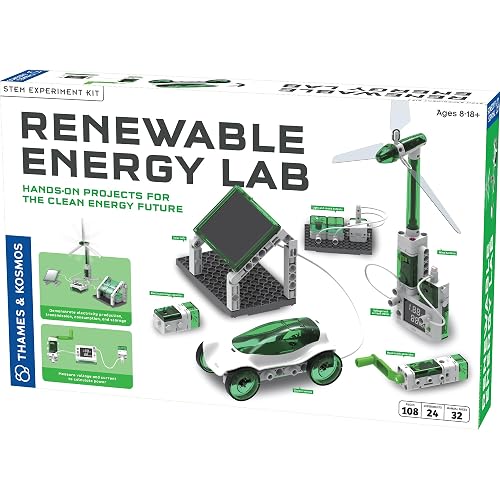 Best for clean energyThames & Kosmos Renewable Energy LabView on Amazon
Note: this review is based on published specifications, manufacturer materials and general owner feedback patterns. We did not build or test these kits ourselves.
Our Top Picks
Quick Comparison
| Product | Best for | Key feature |
|---|---|---|
| Snap Circuits 203 STEM Electronics Kit | Students new to circuits | 42 snap modules, 200+ projects |
| TEACH TECH Mech-5 STEM Coding Robot Building Kit | Robotics beginners | Mechanical coding wheel programming |
| TEACH TECH Hydrobot Arm STEM Hydraulic Building Toy | Hydraulics and mechanics | Working hydraulic robotic arm |
| EUDAX School Physics Labs Basic Electricity Discovery Circuit Kit | Physics and magnetism | Electricity and electromagnetism experiments |
| ELEGOO UNO R3 Smart Robot Car Kit V4 | Advanced coding and Arduino | Camera, app and Arduino compatibility |
| Thames & Kosmos Renewable Energy Lab | Clean energy and sustainability | Solar car, windmill and NGSS alignment |
Snap Circuits 203 STEM Electronics Kit
Includes 42 snap modules for 200+ hands-on electronic projects with a full-color project manual. SNAP CIRCUITS 203 STEM Electronics Kit, 200+ Projects, Ages 8+
Best for: Students who want a structured, low-risk introduction to electronics before moving to soldering or microcontrollers. 6 Best Science Project Solar System Model Kits for Students (2026) goes further into this.
This kit suits students who have never built a circuit or who want a solid foundation in series and parallel wiring. Because the modules snap together, there is no soldering and very little chance of a short causing damage, which makes it a comfortable first step for a teen working independently at home or in a classroom.
Key specs
- 42 snap modules
- 200+ hands-on electronic projects
- Full-color project manual included
- Recommended for ages 8 and up
Pros
- Clear, sequenced project manual that builds skills step by step
- No soldering or tools required
- Strong foundation in circuit theory for later coursework
Cons
- Projects can feel simple for a student with prior electronics experience
- Limited for programming or microcontroller work
Bottom line: The most dependable starting point for a high school student new to electronics. Students who outgrow it can move to an Arduino-based kit.
TEACH TECH Mech-5 STEM Coding Robot Building Kit
Mechanical coding wheel programs the robot to throw, lift, kick, draw and perform other hands-on actions TEACH TECH Mech-5 STEM Coding Robot Building Kit for Kids Ages 10+
Best for: Robotics beginners who want to connect mechanical design with simple programming logic.
The Mech-5 uses a mechanical coding wheel to program the robot, so students can see the sequence of actions without writing code. It works well for a younger high school student or for an older one who wants a gentle introduction to how robots follow instructions.
Key specs
- Mechanical coding wheel for programming
- Robot performs actions such as throwing, lifting, kicking and drawing
- Recommended for ages 10 and up
Pros
- Teaches sequencing and logic without a computer
- Hands-on building reinforces mechanical understanding
- Good bridge between building and programming
Cons
- Programming is limited compared with text-based coding
- Less suited to students who already code in Python or C++
Bottom line: A good choice for a student taking an introductory robotics or engineering course who needs approachable, visual programming.
TEACH TECH Hydrobot Arm STEM Hydraulic Building Toy
Build a working hydraulic robotic arm and explore fluid power, mechanics and engineering through hands-on assembly TEACH TECH Hydrobot Arm STEM Hydraulic Building Toy for Kids Ages 12+
Best for: Students interested in mechanical engineering, fluid power and how hydraulic systems move loads.
This kit lets a student assemble a working hydraulic arm, which makes abstract ideas such as pressure transmission and force multiplication easy to observe. It is a strong match for a student considering a mechanical or industrial engineering path.
Key specs
- Working hydraulic robotic arm build
- Covers fluid power, mechanics and engineering principles
- Recommended for ages 12 and up
Pros
- Makes hydraulic principles visible and tangible
- Build process reinforces mechanical reasoning
- Good for connecting physics lessons to real machines
Cons
- Assembly can be time-consuming for some students
- Focused on mechanics, so it offers little in electronics or coding
Bottom line: The right pick for a hands-on mechanics or engineering enthusiast who learns best by building and seeing a system work.
EUDAX School Physics Labs Basic Electricity Discovery Circuit Kit
EUDAX School Physics Labs Basic Electricity Discovery Circuit and Magnetism Experiment Kits for High School Students Electromagnetism Elementary Electronics
Best for: Students following a high school physics course who want to explore electricity and magnetism through structured experiments.
This kit is organized around the core topics of a physics classroom, including basic circuits and electromagnetism. It works well as a supplement to coursework, giving a student a way to test concepts such as current, voltage and magnetic fields with real components.
Key specs
- Covers basic electricity and circuits
- Includes electromagnetism and magnetism experiments
- Designed for school physics labs
Pros
- Aligns closely with common high school physics topics
- Good for guided, repeatable lab-style experiments
- Useful for both home and classroom use
Cons
- Experiments are more guided than open-ended
- Less engaging for students seeking building or coding projects
Bottom line: A practical choice for a physics student who wants lab-style practice that matches classroom material.
ELEGOO UNO R3 Smart Robot Car Kit V4
FPV Video, Line Tracking, Obstacle Avoidance, Auto Follow, App & IR Control, Class STEM Building & Coding Kit, Gift for 12+ ELEGOO UNO R3 Smart Robot Car Kit V4 with Camera, Compatible with Arduino
Best for: Students ready to write real code and work with Arduino-compatible hardware.
This is one of the more advanced options in the list. The listing describes FPV video, line tracking, obstacle avoidance, auto-follow and app and IR control, which means a student can move from assembly into sensor-based programming. It suits a motivated teen considering computer science or electrical engineering.
Key specs
- Arduino UNO R3 compatible
- Camera with FPV video
- Line tracking, obstacle avoidance and auto-follow functions
- App and IR control
Pros
- Introduces real programming with a widely used microcontroller platform
- Many sensor functions to explore
- Strong preparation for engineering coursework
Cons
- Steeper learning curve than block-based kits
- Requires patience with wiring and troubleshooting
Bottom line: The best fit for a student who already has some coding comfort and wants to build an autonomous robot.
Thames & Kosmos Renewable Energy Lab
Explore Clean Energy Generation | Solar Car, Windmill & More | NGSS-Aligned | STEM Science Learning & Education | Ages 8+ Thames & Kosmos Renewable Energy Lab | Sustainable Energy Set
Best for: Students exploring environmental science, sustainability and clean energy technologies.
This kit focuses on how energy is generated from renewable sources. Its solar car and windmill builds turn concepts such as photovoltaic conversion and wind power into something a student can measure. The listing states that it is NGSS-aligned, which can help with science standards.
Key specs
- Solar car and windmill builds
- NGSS-aligned science content
- Recommended for ages 8 and up
Pros
- Connects energy science to real-world sustainability issues
- Well-known educational publisher behind the kit
- Good for environmental science and earth science courses
Cons
- Narrower focus than general electronics or robotics kits
- Outdoor or bright-light testing may be needed for best solar results
Bottom line: Ideal for a student interested in energy careers or an environmental science course who wants hands-on renewable energy experiments.
Buying Guide
Match the kit to the student’s current skill level
Start with what the student already knows. A kit that is too simple becomes boring within a few sessions, and one that is too advanced leads to frustration and abandoned builds. Snap-together circuit kits suit beginners, while kits that require wiring, sensors or programming suit students with some prior experience.
Good picks for this: Snap Circuits 203 STEM Electronics Kit, ELEGOO UNO R3 Smart Robot Car Kit V4
Check the age recommendation and the learning path
Manufacturers list recommended ages, and these are useful guides rather than strict limits. Look at whether the kit has a sequenced manual that builds skills over time. A kit with progressive projects gives a student more value than one with a single build.
Good picks for this: TEACH TECH Mech-5 STEM Coding Robot Building Kit, Snap Circuits 203 STEM Electronics Kit
Look at the subject focus
STEM covers many fields, and a kit usually emphasizes one or two. Decide whether the student is leaning toward electronics, mechanics, coding, physics or energy. A focused kit tends to teach a subject in more depth than a broad one.
Good picks for this: TEACH TECH Hydrobot Arm STEM Hydraulic Building Toy, Thames & Kosmos Renewable Energy Lab
Consider programming requirements
Some kits use mechanical or block-based programming, while others require text-based code in an Arduino-style environment. Block-based or mechanical systems are easier to start with. Arduino-compatible hardware offers more flexibility but requires more time to learn.
Good picks for this: ELEGOO UNO R3 Smart Robot Car Kit V4, TEACH TECH Mech-5 STEM Coding Robot Building Kit
Check alignment with coursework
If a kit supports classroom material, it can reinforce what the student is learning in physics, chemistry or earth science. Look for statements about standards alignment, such as NGSS, or for experiments that mirror common lab topics.
Good picks for this: EUDAX School Physics Labs Basic Electricity Discovery Circuit Kit, Thames & Kosmos Renewable Energy Lab
Evaluate build durability and part organization
Kits with many small parts benefit from clear storage trays and sturdy components. Owners often report that well-organized kits are easier to reuse, which matters if a student plans to rebuild projects or share the kit with siblings. Check whether replacement parts are available from the manufacturer.
Good picks for this: Snap Circuits 203 STEM Electronics Kit, TEACH TECH Hydrobot Arm STEM Hydraulic Building Toy
Plan for supervision and safety
Most STEM kits are safe for teens, but motors, batteries and small parts still call for common-sense precautions. Keep small parts away from younger children, follow battery instructions and never leave a student to work with any powered device in an unsafe setting. If you have questions about electrical safety, a qualified electrician or science teacher can advise.
Good picks for this: EUDAX School Physics Labs Basic Electricity Discovery Circuit Kit, ELEGOO UNO R3 Smart Robot Car Kit V4
FAQ
What is the best STEM kit for a high school beginner?
For a student new to electronics, a snap-together circuit kit is usually the most approachable choice. The Snap Circuits 203 STEM Electronics Kit requires no soldering and includes a sequenced manual, which helps build a foundation before moving to more complex projects.
Are STEM kits useful for college applications?
Kits can show sustained interest in a field and give a student something concrete to discuss in essays or interviews. They are most valuable when a student documents what they built, what problems they solved and what they would change next time. Admissions outcomes depend on many factors, so a kit should be seen as one way to explore interests.
Do high school students need prior experience to use these kits?
Not always. Several kits are designed to start from zero, while others, such as Arduino-based robot kits, assume some comfort with logic and wiring. Check the manufacturer’s recommended age and the difficulty described in the listing before buying.
Is a robotics kit better than an electronics kit?
Neither is better in general. Robotics kits combine mechanics, electronics and programming, which suits students aiming at engineering. Electronics kits focus more narrowly on circuits and are a strong foundation for that same path. The right choice depends on the student’s interests.
Can these kits be used in a classroom or homeschool setting?
Yes. Many kits are used in classrooms and homeschool programs because they include structured projects and clear instructions. Kits aligned with standards, such as the Thames & Kosmos Renewable Energy Lab, may be easier to fit into a formal curriculum.
Do I need special tools for these kits?
Most of the kits listed here are designed for assembly without soldering. Some Arduino-based kits may benefit from a computer and basic software, and a few projects can require small hand tools. Always read the manual before starting.
Are STEM kits safe for teenagers to use alone?
Most are suitable for supervised or independent use by teens, but any kit with batteries, motors or small parts should be handled responsibly. Follow the manufacturer’s safety warnings and keep the workspace organized. For concerns about electrical components, consult a qualified professional.
Conclusion
The best STEM kit for a high school student depends on skill level and interest. The Snap Circuits 203 STEM Electronics Kit is a dependable starting point for electronics beginners. The TEACH TECH Mech-5 suits students who want approachable robotics, while the TEACH TECH Hydrobot Arm fits mechanical and engineering interests. The EUDAX physics kit supports classroom-style experiments, the ELEGOO UNO R3 Smart Robot Car Kit V4 is best for students ready to write real code, and the Thames & Kosmos Renewable Energy Lab suits anyone exploring clean energy. Match the kit to what the student already knows and where they want to go next, and it will be far more likely to hold their attention.
Sources
- Federal research funding and national STEM education priorities and reports (nsf.gov)
- Guidance on science education, curriculum standards and student learning resources (ed.gov)
- Educational materials and activities for students interested in science and engineering (nasa.gov)
Related reading
- 7 Best STEM Kits for Kids Age 8-10 (2026)
- 6 Best STEM Robotics Kits for Kids: Top Picks Compared (2026)
- 6 Best Chemistry Learning Kits: Picks for Kids and Students (2026)
- Monthly Science Experiment Kits for Kids: 7 Best Picks Compared (2026)
- Horrible Science Experiments Kit: 6 Best Picks for Kids (2026)


