

As an Amazon Associate I earn from qualifying purchases.
Updated November 2026
Choosing from the best science experiment kits can be harder than it looks. Most boxes promise hours of hands-on learning, but the real differences lie in age fit, the topics covered, how many experiments you actually get, and whether the materials are simple enough for an adult to supervise without stress. The six picks below were selected through specification review, brand reputation and patterns in owner feedback rather than hands-on testing. Each one is a kit aimed at kids roughly 8 to 12, with a focus on chemistry, earth science or science-based magic.
Our top picks at a glance
- 1
 TOP CHOICEBest overallUNGLINGA Volcano, Crystal, Magic, Dig, Reation Physics KitView on Amazon
- 2
 TOP CHOICEBest for chemistry setsNational Geographic Amazing Chemistry SetView on Amazon
- 3
 TOP CHOICEBest for young magiciansNational Geographic Science Magic KitView on Amazon
- 4
 Best for volcano and rocket fansNational Geographic Chemistry Set with 45 ExperimentsView on Amazon
- 5
 Best budget pickNational Geographic Magic Chemistry Set with 10 TricksView on Amazon
- 6
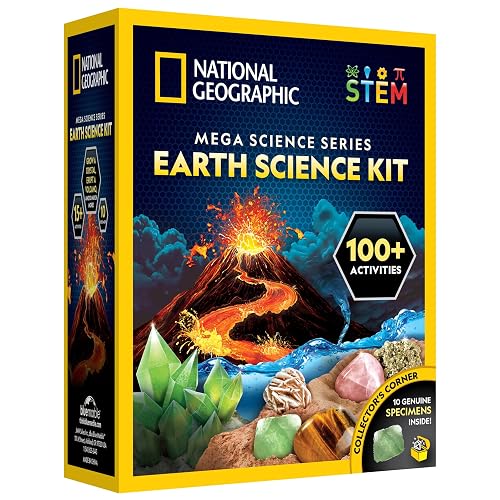 Best for earth scienceNational Geographic Earth Science KitView on Amazon
Our Top Picks
The table below summarizes how each kit lines up against the main buying needs. Use it as a starting point, then read the individual reviews for detail.
| Product | Best for | Key feature |
|---|---|---|
| UNGLINGA Volcano, Crystal, Magic, Dig, Reation Physics Kit | Broad variety of topics | Large number of experiments in one box |
| National Geographic Amazing Chemistry Set | Crystal growing and chemical reactions | 100+ experiments for ages 8–12 |
| National Geographic Science Magic Kit | Kids who love tricks and performance | Science-based magic with 100+ experiments |
| National Geographic Chemistry Set with 45 Experiments | Volcanoes, geysers and rockets | Focused set of 45 reaction-based activities |
| National Geographic Magic Chemistry Set with 10 Tricks | First-time experimenters | Compact set with 10 tricks |
| National Geographic Earth Science Kit | Rocks, minerals and earth processes | 100+ activities including crystal growing |
UNGLINGA Volcano, Crystal, Magic, Dig, Reation Physics Kit
Volcano, Crystal, Magic, Dig, Reation, Physics, Scientist Tools Set, Educational Project for Boys Girls Birthday Gifts Ideas UNGLINGA 150 Experiments Science Kits for Kids Chemistry Lab S.T.E.MToys
Best for: Families who want the widest range of topics in a single box
This kit suits kids who like to jump between subjects, from volcanoes and crystals to physics demonstrations and magic. It is also a practical choice for a parent or teacher who wants a single purchase to cover several weeks of activities.
Key specs
- Listed as containing 150 experiments
- Covers chemistry, physics and earth science themes
- Marketed for children as a STEM educational project
Pros
- Very wide topic coverage in one box
- Good value for families who want variety
- Includes both reaction-based and physics activities
Cons
- Experiment count is high, so some activities may feel repetitive
- Instructions quality varies by reviewer, so read the guide before starting
Bottom line: A strong first kit for a child who wants to explore many branches of science rather than go deep on one.
National Geographic Amazing Chemistry Set
Crystal Growing, Chemical Reactions, STEM Projects, Hands-On Science Experiments, Science Kit, Birthday Gift National Geographic Amazing Chemistry Set with 100+ Experiments Ages 8-12
Best for: Kids who want to focus on crystal growing and chemical reactions
This set is aimed at children around 8 to 12 who enjoy hands-on chemistry. The crystal and reaction focus makes it a good match for classroom projects and homeschool units on matter and change.
Key specs
- Listed as 100+ experiments
- Designed for ages 8–12
- Covers crystal growing and chemical reactions
Pros
- Clear chemistry focus with a recognizable science brand
- Crystal growing gives visible results over several days
- Age range fits the stated 8–12 target well
Cons
- Less variety than multi-topic kits
- Some reactions need adult supervision and careful cleanup
Bottom line: Best for a child who already likes chemistry and wants a dedicated, focused set.
National Geographic Science Magic Kit
Magic Tricks, Chemistry Activities, Hands-On Science Experiments, STEM Projects, STEM Learning Toy, Birthday Gift National Geographic Science Magic Kit with 100+ Experiments for Kids 8-12
Best for: Kids who enjoy performing tricks while learning the science behind them
Science-based magic is a proven way to hold a child’s attention. This kit turns chemistry and physics principles into demonstrations that can be repeated for friends and family.
Key specs
- Listed as 100+ experiments
- Designed for kids aged 8–12
- Combines magic tricks with chemistry activities
Pros
- Strong motivation for kids who like to perform
- Explains the science behind each trick
- Works well for classroom demonstrations
Cons
- Some tricks may be more entertainment than deep science
- Owners often mention that certain props need replacing after repeated use
Bottom line: The right choice for a showman-in-training who still wants real chemistry.
National Geographic Chemistry Set with 45 Experiments
Volcano Eruption, Geyser and Rocket Activities, Hands-On Chemical Reactions, STEM Projects, Science Kit, Birthday Gift National Geographic Chemistry Set with 45 Experiments for Kids 8-12
Best for: Kids who are drawn to volcanoes, geysers and rockets
The 45-experiment count is smaller than some competitors, but the focus on eruptions and reactions makes the set easy to follow. It is a good option for a child who wants visible, dramatic results.
Key specs
- Listed as 45 experiments
- Covers volcano, geyser and rocket activities
- Designed for ages 8–12
Pros
- Dramatic, visible reactions that hold attention
- Focused topic list keeps the kit organized
- Good stepping stone to larger sets
Cons
- Fewer total experiments than the largest kits
- Volcano-style reactions can be messy, so plan a workspace
Bottom line: A solid pick for a child who wants big, dramatic reactions without a huge kit to manage.
National Geographic Magic Chemistry Set with 10 Tricks
Science Experiments, STEM Projects, Science Toys, Hands-On Learning, Magic Tricks, Birthday Gift National Geographic Magic Chemistry Set with 10 Tricks for Kids Ages 8-12
Best for: First-time experimenters who want a short, manageable starter kit
Ten tricks is a modest count, which can be an advantage. A younger or less confident child can finish the whole set and build momentum before moving on to a larger kit.
Key specs
- Listed as 10 tricks
- Designed for ages 8–12
- Combines science toys with magic-style demonstrations
Pros
- Small scope makes it easy to finish
- Good introduction to the idea of testing and observing
- Lower commitment for a first science gift
Cons
- Limited number of activities means it will not last long for avid learners
- Less depth than full experiment sets
Bottom line: Ideal as a first kit or a low-commitment gift for a curious beginner.
National Geographic Earth Science Kit
Crystal Growing, Volcano Experiments, Rock Collection, Earth Science Activities, STEM Projects, Birthday Gift National Geographic Earth Science Kit with 100+ Activities for Kids 8-12
Best for: Kids interested in rocks, minerals and how the earth works
Earth science is often overlooked in favor of chemistry, but it teaches observation and classification skills that carry into biology and geology. This kit brings those topics into a hands-on format.
Key specs
- Listed as 100+ activities
- Covers crystal growing, volcanoes and rock collection
- Designed for ages 8–12
Pros
- Good balance of topics for earth science units
- Rock and mineral activities build observation skills
- Matches well with classroom geology lessons
Cons
- Less focus on chemical reactions than chemistry-specific sets
- Some activities take multiple days, so plan ahead
Bottom line: The best choice for a child who wants to explore the planet beneath their feet.
Buying Guide
Age range and reading level
Most kits list an age range, and the ones in this guide target roughly 8 to 12. Check whether the instructions are written for a child reading independently or meant to be read aloud. A kit that is too advanced leads to frustration, while one that is too simple gets abandoned within a week.
Good picks for this: National Geographic Magic Chemistry Set with 10 Tricks, National Geographic Amazing Chemistry Set
Number and variety of experiments
Experiment count is a useful signal, but variety matters more. A kit with 150 activities across three topics may hold attention longer than one with 100 chemistry reactions. Look at the topic list before counting experiments.
Good picks for this: UNGLINGA Volcano, Crystal, Magic, Dig, Reation Physics Kit, National Geographic Earth Science Kit
Topic focus: chemistry, physics, earth science or magic
Decide what your child is curious about before buying. Chemistry sets emphasize reactions, earth science kits focus on rocks and minerals, and magic kits combine tricks with scientific explanations. A focused kit usually builds deeper understanding than a scattered one.
Good picks for this: National Geographic Amazing Chemistry Set, National Geographic Science Magic Kit
Consumables and replacement materials
Many kits use chemicals, crystals, or single-use items. Check whether the box includes enough material for repeat attempts and whether replacements are sold separately. Owners often report that they run out of certain supplies before finishing the activity list.
Good picks for this: National Geographic Chemistry Set with 45 Experiments, National Geographic Earth Science Kit
Safety and supervision
Chemistry and reaction-based kits can involve heat, mild acids, or messy reactions. Plan for eye protection, a washable work surface and adult supervision, especially for younger children. Follow all manufacturer safety warnings. If you have questions about a specific chemical or reaction, consult a qualified science educator or pediatric safety professional.
Good picks for this: National Geographic Chemistry Set with 45 Experiments, UNGLINGA Volcano, Crystal, Magic, Dig, Reation Physics Kit
Workspace and cleanup
Volcano and crystal activities can leave residue. Choose a space with a table covered by a plastic mat or old tablecloth, and keep paper towels and a small tray nearby. A kit that is easy to set up and clean up is more likely to get used regularly.
Good picks for this: National Geographic Science Magic Kit, National Geographic Magic Chemistry Set with 10 Tricks
Use case: home, classroom or homeschool
A kit for home use can be more open-ended, while a classroom or homeschool kit should align with the lesson plan and be easy to split across students. Consider group size, how many times the kit will be used, and whether you need a single-student set or enough material for pairs.
Good picks for this: UNGLINGA Volcano, Crystal, Magic, Dig, Reation Physics Kit, National Geographic Earth Science Kit
FAQ
What age are science experiment kits best for?
Most kits in this guide are designed for children about 8 to 12. Younger children can take part with adult help, while older kids may want more advanced chemistry or physics sets.
Do science experiment kits include all the materials I need?
Most include the core supplies for their listed experiments, but some activities may require household items such as baking soda, vinegar or a clean container. Read the activity list before starting to avoid surprises.
Are science kits safe for kids to use at home?
Many are designed for home use, but supervision is strongly recommended, particularly for reactions involving heat, mild acids or small parts. Always follow the manufacturer’s safety instructions and keep chemicals out of reach when not in use.
How long does one kit usually last?
Duration depends on the number of experiments and how often they are repeated. A kit with 10 tricks may be finished in a few weekends, while one with 100 or more activities can last several months of occasional use.
What is the difference between a chemistry kit and an earth science kit?
Chemistry kits focus on reactions, mixtures and changes in matter. Earth science kits focus on rocks, minerals, crystals and natural processes. Both build observation skills, so the choice depends on the topic your child finds most interesting.
Can science kits be used in a classroom?
Yes, especially kits with clear activity cards and enough material for group work. Teachers should check the number of experiments and material counts against class size before buying.
Should I buy a magic kit or a full experiment kit?
A magic kit is a good choice for a child who enjoys performing and presenting. A full experiment kit suits a child who wants to investigate how and why reactions happen. Some science magic kits blend both approaches.
Conclusion
Among the best science experiment kits in this list, the UNGLINGA Volcano, Crystal, Magic, Dig, Reation Physics Kit offers the widest topic range for families who want variety. The National Geographic Amazing Chemistry Set suits children focused on crystal growing and reactions, while the National Geographic Science Magic Kit is best for young performers. The National Geographic Chemistry Set with 45 Experiments is a strong pick for volcano and rocket fans, the National Geographic Magic Chemistry Set with 10 Tricks works well as a starter, and the National Geographic Earth Science Kit fits children drawn to rocks and minerals. Match the kit to your child’s interests, supervision level and workspace, and the right pick will be the one that actually gets used.
Sources
- Consumer safety guidance on toys and children's products, including recalls and age labeling (cpsc.gov)
- Research and education resources on STEM learning and hands-on science activities (nsf.gov)
- Best practices for classroom science investigations and safety in school labs