
As an Amazon Associate I earn from qualifying purchases.
Updated November 2026
Parents, teachers and homeschoolers searching for the best science lab kits usually want the same thing: hands-on experiments that teach real chemistry, physics and earth science without turning the kitchen into a disaster zone. The kits below were chosen by comparing manufacturer specifications, brand track record, and the patterns owners commonly describe in their feedback. Our main criteria were the number and variety of experiments, the age range the kit targets, whether the included materials are clearly labeled and safe for home use, and how well the instruction booklet explains the science behind each activity.
Our top picks at a glance
- 1
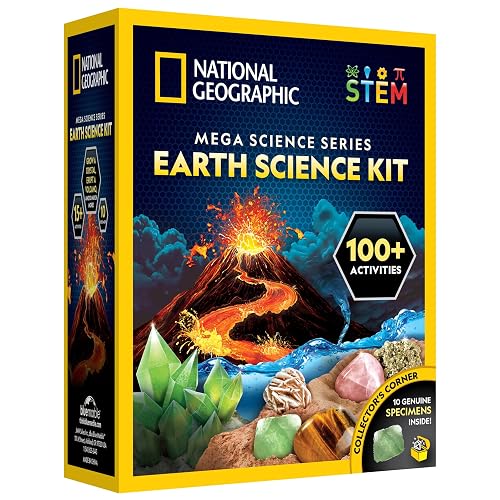
 TOP CHOICEBest overallNational Geographic Mega Science Lab, Earth Science and Chemistry SetView on Amazon
- 2
 TOP CHOICEBest for large experiment varietyUNGLINGA 150 Experiments Science Kits for Kids Chemistry LabView on Amazon
- 3
 TOP CHOICEBest for younger kids (8 to 10)STEM Educational Learning Scientific Tools Science Kit for KidsView on Amazon
- 4
 Best for volcano and crystal projectsUNGLINGA 70 Lab Experiments Science Kits for Kids Chemistry SetView on Amazon
- 5
 Best for gift-givingUNGLINGA 50+ Science Lab Experiments Kit for KidsView on Amazon
- 6
 Best budget pick with glow-in-the-dark activitiesPW Science Experiments Kit for Kids 8-12View on Amazon
Our Top Picks
Quick Comparison
| Product | Best for | Key feature |
|---|---|---|
| National Geographic Mega Science Lab | Kids who want a structured, well-explained curriculum | 75 experiments with a detailed guide |
| UNGLINGA 150 Experiments Science Kits for Kids Chemistry Lab | Kids who want maximum variety | 150 experiments across chemistry and physics |
| STEM Educational Learning Scientific Tools Science Kit for Kids | Ages 8 to 10 and scientist role play | 80 experiments plus scientific tools |
| UNGLINGA 70 Lab Experiments Science Kits for Kids Chemistry Set | Volcano and crystal projects | Erupting volcano and fruit circuits activities |
| UNGLINGA 50+ Science Lab Experiments Kit for Kids | Birthday and holiday gifting | Gemstone and volcano eruption activities |
| PW Science Experiments Kit for Kids 8-12 | Lower-cost starter kits | 15+ activities with glow-in-the-dark experiments |
National Geographic Mega Science Lab, Earth Science and Chemistry Set
Earth Science, Chemistry Set, Science Magic, Easy Experiments, STEM Projects, Science Kit for Kids, Birthday Gift National Geographic Mega Science Lab with 75 Experiments for Kids 8-12 For a deeper look, 7 Best Smithsonian Optics Room Planetarium and Dual Projector Science Kits (2026): Our Picks covers this in detail.
Best for: Kids who want a structured, well-explained curriculum
This kit suits children roughly 8 to 12 who enjoy following step-by-step instructions and want to understand why each reaction happens. It is a good fit for homeschool families who want a sequenced set of activities.
Key specs
- 75 experiments covering chemistry, earth science and magic-style demonstrations
- Designed for ages 8 to 12, per the listing
- Includes an instruction booklet with science explanations
Pros
- Explanations go beyond “what to do” and cover the underlying concepts
- Strong coverage of earth science, which many lab kits skip
- Brand recognition makes replacement materials easier to find
Cons
- Some experiments use consumables that run out, so plan for restocking
- Older children may find a few activities too simple
Bottom line: The most dependable choice for a child who wants a guided, educational experience with clear science explanations.
UNGLINGA 150 Experiments Science Kits for Kids Chemistry Lab
Volcano, Crystal, Magic, Dig, Reation, Physics, Scientist Tools Set, Educational Project for Boys Girls Birthday Gifts Ideas UNGLINGA 150 Experiments Science Kits for Kids Chemistry Lab S.T.E.MToys
Best for: Kids who want maximum variety
Families who want a long list of activities to work through over many months will find this kit appealing. It includes a broad mix of chemistry and physics projects, plus tools suited to a young scientist’s first lab.
Key specs
- 150 experiments as stated in the listing name
- Covers chemistry and physics topics
- Marketed as an S.T.E.M. toy for birthdays and gifting
Pros
- High experiment count gives long-term use
- Mix of chemistry and physics in one set
- Works well as a gift that lasts beyond one afternoon
Cons
- Instructions can be dense for younger readers without adult help
- Some owners report that not every experiment is equally engaging
Bottom line: Best for families who want to stretch a single kit across many months of experiments.
STEM Educational Learning Scientific Tools Science Kit for Kids
STEM Educational Learning Scientific Tools,Birthday Gifts and Toys for 8 9 10 Years Old Boys Girls Kids Science Kit for Kids,80 Science Lab Experiments,Scientist Role Play
Best for: Ages 8 to 10 and scientist role play
This kit is aimed at younger elementary students who enjoy pretending to be scientists. The role-play element and included scientific tools make it a good starter set for a child who is just beginning to explore lab work.
Key specs
- 80 science lab experiments per the listing
- Targeted at ages 8 to 10
- Includes scientific tools for role play
Pros
- Age range matches younger elementary learners well
- Role-play tools encourage imaginative learning
- Large experiment count for the price tier
Cons
- Tools may feel lightweight compared with classroom-grade equipment
- Older children may outgrow the content quickly
Bottom line: A good first lab set for a younger child who loves dress-up and pretend science.
UNGLINGA 70 Lab Experiments Science Kits for Kids Chemistry Set
Crystal, Erupting Volcano, Fruit Circuits, S.T.E.M Activities Science Project, Birthday Gifts Idea for Girls Boys UNGLINGA 70 Lab Experiments Science Kits for Kids Chemistry Set Toys
Best for: Volcano and crystal projects
Children who are drawn to dramatic reactions and visible results tend to enjoy this set. The volcano eruption and crystal growing activities are the headline experiments, and they produce results quickly enough to hold a young attention span.
Key specs
- 70 lab experiments per the listing
- Includes crystal, erupting volcano and fruit circuits activities
- Positioned as a STEM activity set
Pros
- Visually exciting experiments, including the volcano and crystals
- Fruit circuits introduce basic electricity in an accessible way
- Good mix of chemistry and electronics topics
Cons
- Crystal growing takes days, which can frustrate impatient kids
- Volcano activities require a clean-up plan
Bottom line: Pick this kit for a child who wants the wow factor of volcanoes and crystals alongside basic circuit experiments.
UNGLINGA 50+ Science Lab Experiments Kit for Kids
Educational Scientist Toys Gifts for Boys Girls Chemistry Set, Gemstone, Volcano Eruption UNGLINGA 50+ Science Lab Experiments Kit for Kids, STEM Activities
Best for: Birthday and holiday gifting
This kit is packaged and marketed as a gift, with a gemstone activity and volcano eruption experiment that make the unboxing feel special. It is a reasonable choice when you need a present that still has educational value.
Key specs
- 50+ science lab experiments per the listing
- Includes gemstone and volcano eruption activities
- Marketed for boys and girls as a chemistry set
Pros
- Gift-ready presentation with an appealing theme
- Gemstone activity is distinct from typical volcano-only sets
- Suitable for mixed groups of children
Cons
- Fewer total experiments than the larger sets on this list
- Recipients who are already experienced may want more advanced content
Bottom line: A solid gift pick for a child new to experiments who would enjoy a themed surprise.
PW Science Experiments Kit for Kids 8-12
STEM Kit 15+ Activities, Lab Kit 8 9 10 11 12 Year Olds, Birthday Gift Boys Girls – PW Science Experiments Kit for Kids 8-12 Years Old | Glow in the Dark
Best for: Lower-cost starter kits
This kit offers a compact set of around 15 activities with a glow-in-the-dark theme. It suits a child who wants to try a few experiments without committing to a large collection.
Key specs
- 15+ activities per the listing name
- Targets ages 8 to 12
- Glow-in-the-dark experiments included
Pros
- Compact, approachable starter set
- Glow-in-the-dark theme adds novelty
- Good entry point for a first-time lab user
Cons
- Far fewer experiments than the larger kits here
- Limited depth for children who want to go further
Bottom line: A sensible starter option for a child testing interest in science before buying a bigger set.
Buying Guide
Age range and reading level
Most lab kits list an age range, and it matters more than it first appears. A kit aimed at ages 8 to 12 usually assumes a child can read and follow multi-step instructions independently. For younger children, look for kits with picture-based steps or plan to read aloud. For older children, check whether the content goes beyond basic reactions into real concepts like pH, states of matter or circuits.
Good picks for this: STEM Educational Learning Scientific Tools Science Kit for Kids, PW Science Experiments Kit for Kids 8-12
Number and variety of experiments
Experiment count is an easy number to compare, but variety matters more than quantity. A kit with 150 experiments that all use the same vinegar-and-baking-soda reaction offers less learning than a 75-experiment kit spanning chemistry, physics and earth science. Read the listing or box to see which subject areas are covered.
Good picks for this: National Geographic Mega Science Lab, UNGLINGA 150 Experiments Science Kits for Kids Chemistry Lab
Quality of instructions and science explanations
A good kit explains why an experiment works, not just how to perform it. Look for booklets that describe the reaction, define key terms and suggest a follow-up question. Clear diagrams and numbered steps reduce frustration, especially for younger users working without adult help.
Good picks for this: National Geographic Mega Science Lab, UNGLINGA 70 Lab Experiments Science Kits for Kids Chemistry Set
Included materials and consumables
Check whether the kit includes the chemicals and tools you need, or whether you must buy common household items. Some kits use consumables such as baking soda, vinegar or food coloring that you will need to restock. Others include single-use packets that run out after a few activities. Knowing this up front avoids surprises halfway through the set.
Good picks for this: UNGLINGA 50+ Science Lab Experiments Kit for Kids, STEM Educational Learning Scientific Tools Science Kit for Kids
Safety and adult supervision
Lab kits can include chemicals, heat sources or small parts. Read the safety notes before starting, and supervise children under about 8, or any child using activities involving volcanoes, acids or electrical components. Store chemicals out of reach, wear eye protection where the instructions advise it, and clean up spills promptly. If a child has allergies or sensitivities to any materials, check the ingredient list first and consult a pediatrician or relevant professional if you have questions.
Good picks for this: UNGLINGA 70 Lab Experiments Science Kits for Kids Chemistry Set, National Geographic Mega Science Lab
Durability and storage
Many kits come in a plastic case with dividers. Check how the tools are made and whether the case closes securely. A tidy storage system helps younger children return materials and keeps small pieces from getting lost. Plastic tools are generally adequate for home use, but manufacturers’ specifications vary, so read the materials list.
Good picks for this: STEM Educational Learning Scientific Tools Science Kit for Kids, UNGLINGA 50+ Science Lab Experiments Kit for Kids
Use case: home, classroom or homeschool
A kit for home use should be self-contained and easy to set up at a kitchen table. A homeschool or small classroom setting benefits from a kit with a structured curriculum and a longer list of experiments that can be sequenced over weeks. Decide how often you expect to use the kit before choosing.
Good picks for this: National Geographic Mega Science Lab, UNGLINGA 150 Experiments Science Kits for Kids Chemistry Lab
FAQ
What age is a science lab kit best for?
Most kits target roughly ages 8 to 12. Younger children can enjoy simpler activities with adult help, while older children may want more advanced chemistry and physics content. Always check the manufacturer’s stated age range and read the safety notes.
Do science lab kits need adult supervision?
For children under about 8, and for any activity involving heat, acids or volcanoes, adult supervision is strongly recommended. Even older children should follow safety instructions closely and keep chemicals stored safely.
Are the experiments in these kits safe to do at home?
Kits designed for children are generally made with household-safe materials, but safety depends on following the instructions, wearing eye protection where advised, and cleaning up properly. If you have concerns about any ingredient or reaction, consult a pediatrician or a qualified science educator.
How many experiments should a good lab kit include?
There is no single right number. Kits in this list range from about 15 to 150 activities. A higher count gives more variety over time, but a smaller, well-explained set can teach more than a large one with repetitive activities.
Do I need to buy extra supplies for these kits?
Some kits include everything needed, while others call for common household items such as baking soda, vinegar or food coloring. Read the product description or the instruction booklet to see what you will need to restock.
Can a science lab kit be used in a classroom?
Many families and teachers use these kits in small groups. For a full classroom, you may need multiple kits, and you should check that the materials are suitable for group use and meet your school’s safety policies.
Which kit is best for a first-time science learner?
For a beginner, a kit with clear instructions and a moderate experiment count tends to work best. The National Geographic Mega Science Lab offers strong explanations, while the STEM Educational Learning Scientific Tools kit suits younger learners who enjoy role play.
Conclusion
For most families, the National Geographic Mega Science Lab is the most dependable choice because its explanations go beyond basic steps. Children who want the largest number of activities to work through will find the UNGLINGA 150 Experiments kit most useful. Younger learners who enjoy pretend science should look at the STEM Educational Learning Scientific Tools kit, while volcano and crystal fans will get the most from the UNGLINGA 70 Experiments set. The UNGLINGA 50+ kit works well as a themed gift, and the PW Science Experiments kit is a sensible starter if you want to test interest before committing to a larger collection. Match the kit to the child’s age, reading level and interests, and check the safety notes before starting.