

As an Amazon Associate I earn from qualifying purchases.
Updated November 2026
Parents, teachers, and homeschool families looking for the best earth science kits usually want one thing: a set that actually gets a child doing geology, not just reading about it. The right kit depends on age, reading level, and whether the goal is hands-on fun or structured learning. The seven kits below were compared on the criteria that matter most for this category: the number and variety of experiments, the age range the manufacturer specifies, the quality and completeness of included materials (rock samples, crystal-growing supplies, volcano chemistry), safety guidance for young users, and the patterns owners tend to mention in their feedback. None of these were tested in a lab or in our own hands; this is a research-based comparison built from specifications and reported owner experience.
Our top picks at a glance
- 1
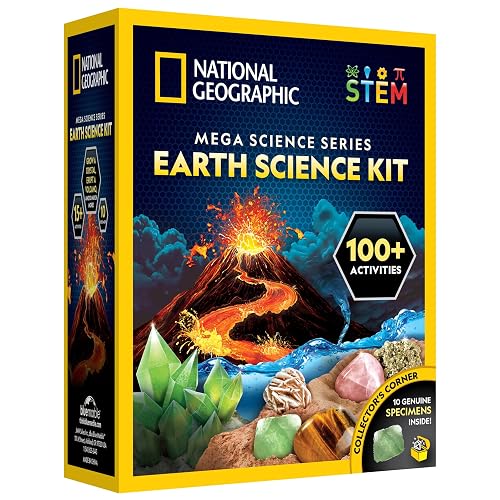 TOP CHOICEBest overallNational Geographic Earth Science KitView on Amazon
- 2
 TOP CHOICEBest for older STEM beginnersNational Geographic Mega Science LabView on Amazon
- 3
 TOP CHOICEBest budget pickJapace Earth Science Kit for KidsView on Amazon
- 4
 Best for variety of experimentsDiscovery Planet Earth Science KitView on Amazon
- 5
 Best for volcano fansNational Geographic Ultimate Volcano Science KitView on Amazon
- 6
 Best for rock collectingNational Geographic Geology KitView on Amazon
- 7
 Best for early elementary classroomsCarson Dellosa Earth and Space Science KitsView on Amazon
Our Top Picks
Quick Comparison
| Product | Best for | Key feature |
|---|---|---|
| National Geographic Earth Science Kit | Ages 8–12 general earth science | 100+ activities including crystals and volcanoes |
| National Geographic Mega Science Lab | Ages 8–12 broad STEM learners | 75 experiments across earth and chemistry |
| Japace Earth Science Kit for Kids | Ages 6–14 budget-minded families | Geode breaking and gem dig activities |
| Discovery Planet Earth Science Kit | Ages 8+ variety seekers | 65 experiments including tornado and fossils |
| National Geographic Ultimate Volcano Science Kit | Ages 8–12 volcano enthusiasts | Eruption powder and pop crystals with sound effects |
| National Geographic Geology Kit | Ages 8–12 rock collectors | Real specimens and a gemstone dig |
| Carson Dellosa Earth and Space Science Kits | Ages 7–10 early elementary | Games and challenges covering earth and space |
National Geographic Earth Science Kit
Crystal Growing, Volcano Experiments, Rock Collection, Earth Science Activities, STEM Projects, Birthday Gift National Geographic Earth Science Kit with 100+ Activities for Kids 8-12
Best for: General earth science exploration for kids ages 8–12
This is a well-rounded starting point for a child who wants variety across crystals, volcanoes, and rock identification. It suits families who want one kit that covers several topics without buying separate sets. 7 Best Smithsonian Optics Room Planetarium and Dual Projector Science Kits (2026): Our Picks goes further into this.
Key specs:
- Listed as 100+ activities
- Covers crystal growing, volcano experiments, and a rock collection
- Designed for ages 8–12 per the listing
Pros:
- Broad topic coverage in a single box
- Recognizable brand with age-appropriate instructions
- Good mix of quick experiments and longer projects
Cons:
- Some activities need adult supervision and extra household supplies
- Younger children may need help with the written steps
Bottom line: A strong first pick for a curious 8–12-year-old who wants breadth over depth.
National Geographic Mega Science Lab
Earth Science, Chemistry Set, Science Magic, Easy Experiments, STEM Projects, Science Kit for Kids, Birthday Gift National Geographic Mega Science Lab with 75 Experiments for Kids 8-12
Best for: Older STEM beginners who want more than earth science alone
This kit mixes earth science with chemistry and general science magic, which suits a child who enjoys experimenting across subjects rather than one specialty.
Key specs:
- Listed as 75 experiments
- Combines earth science and chemistry activities
- Designed for ages 8–12 per the listing
Pros:
- Large number of experiments for the price category
- Good introduction to lab-style thinking
- Covers more than one science discipline
Cons:
- Earth science content is a portion of the whole, not the focus
- Some chemistry steps require careful adult supervision
Bottom line: Best for a child who wants a broad science lab rather than a geology-only set.
Japace Earth Science Kit for Kids
Geology Kit with Break Your Own Geodes, Crystal Growing Experiment, Rock Mining Kit, Birthday Gifts Toys for Boys Girls Japace Earth Science Kits for Kids Age 6-8-12-14, Birthstone Gems Dig Kit
Best for: Budget-minded families and a wide age range
The listing targets ages 6 through 14, making it one of the more flexible options for mixed-age households. Its focus on geode breaking and gem digging gives it a clear hands-on identity.
Key specs:
- Listed for ages 6–8, 12, and 14
- Includes geode breaking, crystal growing, and a birthstone gem dig
- Rock mining kit component per the listing
Pros:
- Wide stated age range
- Strong hands-on appeal with geodes and gem digging
- Budget-friendly positioning in its category
Cons:
- Brand is less established than the National Geographic line
- Owners sometimes mention that instructions could be more detailed
Bottom line: A practical choice for families who want a lot of hands-on digging on a modest budget.
Discovery Planet Earth Science Kit
Discovery™ Planet Earth Science Kit – 65 Experiment STEM Lab for Kids| Includes DIY Volcano, Tornado, Fossils, Crystals, & Slime| Geology, Chemistry & Archeology Learning Toy|Educational Gift| Ages 8+
Best for: Variety seekers who want many experiments in one box
With 65 listed experiments spanning volcanoes, tornadoes, fossils, crystals, and slime, this kit appeals to a child who likes switching topics often.
Key specs:
- Listed as 65 experiments
- Includes DIY volcano, tornado, fossil, and crystal activities
- Designed for ages 8 and up
Pros:
- High experiment count with varied topics
- Tornado and slime activities add range beyond rocks
- Clearly labeled age guidance
Cons:
- Breadth can mean less depth on any single topic
- Some experiments are messy and need a prepared workspace
Bottom line: Good for a child who wants the most activities per box and enjoys trying many things.
National Geographic Ultimate Volcano Science Kit
3X More Eruptions, Pop Crystals with Exciting Sounds, Eruption Powder, Hands-On Earth Science, STEM Activity, Birthday Gift National Geographic Ultimate Volcano Science Kit for Kids Ages 8-12
Best for: Volcano enthusiasts and young chemists
This kit is built around eruptions, and its listing emphasizes sound effects and a larger eruption reaction than standard volcano kits.
Key specs:
- Listed as producing 3X more eruptions
- Includes pop crystals with exciting sounds and eruption powder
- Designed for ages 8–12
Pros:
- Dramatic, memorable reactions
- Focused topic makes instructions easy to follow
- Good entry point to earth science through volcanoes
Cons:
- Narrower scope than a general earth science kit
- Eruption materials are single-use and need replacing
Bottom line: Ideal if your child’s interest starts and ends with volcanoes.
National Geographic Geology Kit
Rock Collection Box, Crystal Growing Activity, Gemstone Dig Kit, Real Specimens, Hands-On Earth Science, Birthday Gift National Geographic Geology Kit with Crystals, Gem Dig, & Rock Collection
Best for: Rock collectors and gemstone fans
The emphasis here is on real specimens and a dig-style gemstone activity, which tends to suit children who enjoy identifying and organizing what they find.
Key specs:
- Includes a rock collection box with real specimens
- Crystal growing and gem dig activities
- Designed for ages 8–12 per the listing
Pros:
- Real specimens rather than only simulated samples
- Gem dig adds a sense of discovery
- Good for building sorting and identification skills
Cons:
- Less focus on chemistry-based experiments
- Collection size may feel limited to avid collectors
Bottom line: A natural fit for a child who already loves rocks and minerals.
Carson Dellosa Earth and Space Science Kits
Earth and Space Science Kits for Kids Ages 7-10, Educational Games and Experiments for 2nd Grade and Up Carson Dellosa STEM Challenges, Hands-On, Science Kits
Best for: Early elementary learners and classroom use
Aimed at younger children, this kit combines earth and space topics in a game-and-challenge format that suits structured lessons.
Key specs:
- Listed for ages 7–10
- Written for 2nd grade and up per the listing
- Includes educational games and STEM challenges
Pros:
- Covers both earth and space topics
- Game format keeps younger learners engaged
- Suits classroom or homeschool lesson planning
Cons:
- Less focused on messy, hands-on chemistry experiments
- May feel young for children past age 10
Bottom line: The right choice for a teacher or parent of a younger child who needs structured, game-based earth and space lessons.
Buying Guide
Age Range and Reading Level
Check the stated age range first. Kits for ages 8 and up usually assume a child can read steps independently and measure small amounts. Younger children need more adult help, so plan for a reading partner. Kits labeled 6 and up or 7–10 are generally written with simpler language and more pictures.
Good picks for this: Carson Dellosa Earth and Space Science Kits, Japace Earth Science Kit for Kids
Number and Variety of Experiments
A higher experiment count can mean more value, but check the mix. Some kits list many items that are variations on one activity. Look for a spread across crystals, volcanoes, rocks, and fossils if your child wants range.
Good picks for this: Discovery Planet Earth Science Kit, National Geographic Earth Science Kit
Included Materials and Consumables
Check whether the kit includes everything for each activity or expects you to buy supplies such as baking soda, vinegar, or food coloring. Reusable components like rock samples and containers last longer than single-use eruption powders or crystal-growing solutions.
Good picks for this: National Geographic Geology Kit, National Geographic Ultimate Volcano Science Kit
Topic Focus: Broad or Specialized
A general earth science kit covers many areas but may go shallow. A specialized kit, such as one focused on volcanoes or rocks, goes deeper on a single topic. Match the focus to what your child already shows interest in.
Good picks for this: National Geographic Ultimate Volcano Science Kit, National Geographic Geology Kit
Safety and Supervision
Many earth science experiments involve acids, heat, or fine powders. Read the safety section before opening the kit. Plan for goggles, a covered work surface, and adult supervision for any chemistry steps. If you have concerns about a child’s sensitivity to dust or chemicals, consult a pediatrician or a qualified science educator before starting.
Good picks for this: National Geographic Mega Science Lab, Discovery Planet Earth Science Kit
Durability and Storage
Check whether the box and components are sturdy enough for repeated use. Look for organized compartments or a storage tray that keeps small pieces together. Kits used in classrooms or shared among siblings benefit from clearly labeled parts.
Good picks for this: National Geographic Earth Science Kit, Carson Dellosa Earth and Space Science Kits
Best Use Case: Home, Classroom, or Homeschool
A kit for home use can be more flexible about timing and mess. Classroom or homeschool use may need kits that support group activities, clear lesson structure, and repeated runs. Consider how many children will use the kit and how often.
Good picks for this: Carson Dellosa Earth and Space Science Kits, National Geographic Earth Science Kit
FAQ
What age are earth science kits for?
Most kits in this category are designed for ages 6 to 12, with some extending to 14. Always check the manufacturer’s stated age range and consider your child’s reading ability, since many activities require reading steps independently.
Are earth science kits safe for kids?
Most are designed for home use, but some experiments involve acids, bases, heat, or fine powders. Use goggles, work on a covered surface, and supervise any chemistry steps. If a child has allergies or sensitivities, check with a pediatrician before starting.
Do I need extra supplies for these kits?
Some kits include everything, while others ask for common household items such as baking soda, vinegar, or food coloring. Read the activity list in advance so you can gather supplies before a planned session.
What is the difference between an earth science kit and a geology kit?
Earth science is the broader field, covering rocks, weather, volcanoes, water, and space. Geology focuses specifically on rocks, minerals, and the Earth’s structure. A geology kit goes deeper on rocks and crystals, while an earth science kit spreads across more topics.
Can these kits be used in a classroom?
Yes, though some are better suited to classrooms than others. Kits with game formats and clear lesson structure, such as the Carson Dellosa option, tend to work well with groups. Plan for enough materials for each student or group, since many kits are sized for one or two children.
How long does an earth science kit keep a child busy?
This depends on the number of experiments and the child’s pace. Kits listing 60 or more activities can keep a motivated child occupied for several weeks, while smaller or specialized kits may run through faster. Crystal growing and some volcano activities take multiple days to show results.
Conclusion
For most families, the best earth science kit depends on age, interest, and how much hands-on mess you can manage. The National Geographic Earth Science Kit is a broad, dependable starting point for ages 8 to 12. The Discovery Planet Earth Science Kit suits children who want the most experiments and topic variety. The Japace kit fits a budget-minded family with a wide age range, while the National Geographic Geology Kit and the Ultimate Volcano Science Kit serve children with a clear single interest. For younger children in a structured setting, the Carson Dellosa kit is the most fitting choice. Match the kit to the child’s reading level and curiosity, and the time spent with it will be far more productive.
Sources
- Research and education resources on Earth science and STEM learning for students (nsf.gov)
- Geology, rock, and mineral reference materials for students and educators (usgs.gov)
- Earth science and space education materials for classroom and home use (nasa.gov)