
As an Amazon Associate I earn from qualifying purchases.
Updated November 2026
Choosing the best classroom STEM equipment means matching hands-on tools to the age group, lesson goals and storage space you actually have. Teachers and homeschool parents need kits that survive repeated use, come with enough materials for a whole group and let students explore a concept without constant adult help. The picks below were selected by reviewing manufacturer specifications, brand reputation and common owner feedback patterns, focusing on age range, how many students each kit serves, the science concepts covered and how much setup a lesson requires.
Our top picks at a glance
- 1
 TOP CHOICEBest overallkortes 24 Pack STEM Kits for Classroom, Science Building Project Craft for Ages 8-12View on Amazon
- 2
 TOP CHOICEBest for biology labsMicroscope Slides with Specimens for Kids, 60 Lab-Grade Prepared SlidesView on Amazon
- 3
 TOP CHOICEBest for motion and friction lessonsFun Express STEM Motion & Friction Science Kit for Kids, 21 PiecesView on Amazon
- 4
 Best for whole-class physicsCatapult Kit for Kids, 30-Pack Bulk STEM Kit for ClassroomsView on Amazon
- 5
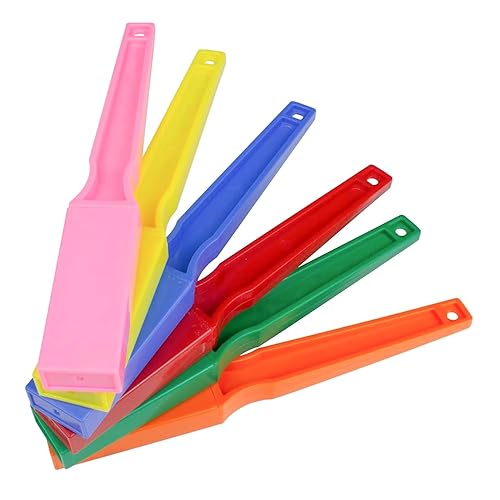 Best for magnetism unitsUnited Scientific STEM Magnetic Wands, Classroom & Homeschool (Set of 6)View on Amazon
- 6
 Best for heat transfer demosAir & Gas Convection Apparatus, Heat Transfer Demonstration BoxView on Amazon
Our Top Picks
| Product | Best for | Key feature |
|---|---|---|
| kortes 24 Pack STEM Kits for Classroom | Ages 8–12 building projects | 24 kits in one pack |
| Microscope Slides with Specimens for Kids | Biology labs and homeschool | 60 prepared slides |
| Fun Express STEM Motion & Friction Science Kit | Ages 5–12 motion lessons | 21 pieces including a wooden ramp |
| Catapult Kit for Kids, 30-Pack | Whole-class physics of force | 30 mini catapults, pre-counted supplies |
| United Scientific STEM Magnetic Wands | Magnetism and material testing | 6 color-coded wands |
| Air & Gas Convection Apparatus | Heat transfer demonstrations | Enclosed demo box for convection currents |
kortes 24 Pack STEM Kits for Classroom, Science Building Project Craft for Ages 8-12
kortes 24 Pack STEM Kits for Classroom, Science Building Project Craft for Ages 8-12, 3D Wooden Model Kit, STEM Toys for Birthday Party Favors School Exchange Gifts Christmas Advent Gifts
Best for: Best overall
This pack suits teachers who need many identical building projects for a group of students aged roughly 8 to 12. Because it comes in a 24-pack, it works well for rotating stations or for sending a kit home with each student. A related read: 6 Best Leupold Quick-Stem Binocular Tripod Adapter Options (2026).
Key specs
- 24 kits in one pack
- 3D wooden model building format
- Listed for ages 8–12
Pros
- Enough kits for a full class or a large rotation
- Builds spatial reasoning and following instructions
- Works for STEM lessons and party or exchange gifts alike
Cons
- Wooden pieces may need supervision with younger students
- Projects are craft-style, so the science content is lighter than in dedicated lab kits
Bottom line: A strong first choice for teachers who want one versatile, class-sized building kit for upper elementary students.
Microscope Slides with Specimens for Kids, 60 Lab-Grade Prepared Slides
Microscope Slides with Specimens for Kids, 60 Lab-Grade Prepared Microscope Slides, Animal/Plant/Microbe/Tissue Samples, STEM Biology Kit for Homeschool, Classroom Labs & Science Education
Best for: Best for biology labs
Science teachers and homeschool families who already own a microscope will get the most value here. The set covers animal, plant, microbe and tissue samples, giving students varied material to compare under magnification.
Key specs
- 60 prepared microscope slides
- Categories include animal, plant, microbe and tissue samples
Pros
- Large variety for comparison labs
- Ready to use with a standard compound microscope
- Useful across several grade levels
Cons
- Requires a microscope, which is not included
- Slides are fragile and need careful storage
Bottom line: Best for schools or homeschoolers building out a biology unit who want a broad specimen collection in one purchase.
Fun Express STEM Motion & Friction Science Kit for Kids, 21 Pieces
21 Piece, Educational Learning Resources with Wooden Ramp, Physics Engineering Toys, For Classroom & Homeschool Experiments Fun Express STEM Motion & Friction Science Kit for Kids Age 5-12
Best for: Best for motion and friction lessons
This kit fits elementary classrooms teaching force, motion and friction, especially for students aged 5 to 12. The wooden ramp gives a clear, repeatable setup for timing and comparing surfaces.
Key specs
- 21 pieces
- Includes a wooden ramp
- Listed for ages 5–12
Pros
- Simple setup suitable for younger learners
- Good for repeatable comparison experiments
- Aligns with common elementary force-and-motion units
Cons
- Limited to motion and friction concepts
- Pieces may need to be counted and tracked for groups
Bottom line: A practical pick for a single unit on forces, ideal for teachers who need a focused, low-prep kit.
Catapult Kit for Kids, 30-Pack Bulk STEM Kit for Classrooms
Builds 30 mini catapults with pre-counted supplies for a full class, hands-on physics of force and energy Catapult Kit for Kids, 30-Pack – Bulk STEM Kit for Classrooms, Ages 8+
Best for: Best for whole-class physics
Teachers running an engineering or physics project for a full class will appreciate that this kit builds 30 catapults with pre-counted supplies, which saves significant prep time. It is aimed at students aged 8 and up.
Key specs
- 30 mini catapults in one pack
- Pre-counted supplies
- Listed for ages 8+
Pros
- Covers a full class without extra counting
- Demonstrates force, energy and trajectory clearly
- Encourages design iteration and data collection
Cons
- Projectiles require a clear, supervised launch area
- Assembly takes time before the first lesson
Bottom line: Best for teachers who want a hands-on engineering challenge for an entire class at once.
United Scientific STEM Magnetic Wands, Classroom & Homeschool (Set of 6)
Polyethylene-Encased Magnetic Wands, 6 Color-Coded Units, STEM Curricula Support, Magnetism & Material Testing United Scientific™ STEM Magnetic Wands, Classroom & Homeschool (Set of 6)
Best for: Best for magnetism units
Elementary and middle school teachers covering magnetism and material testing will find this set useful. The color-coded wands help students sort and track which materials respond to a magnet during group work.
Key specs
- Set of 6 color-coded wands
- Polyethylene-encased magnets
Pros
- Color coding simplifies group stations
- Encased magnets are easier to handle safely
- Supports both magnetism and material-testing lessons
Cons
- Magnet strength is modest, so strong-magnet experiments need separate tools
- Only one unit of the topic, so it pairs best with other materials
Bottom line: A well-organized choice for classroom magnetism stations, especially for teachers with several small groups.
Air & Gas Convection Apparatus, Heat Transfer Demonstration Box
Air & Gas Convection Apparatus – Heat Transfer & Thermal Convection Current Demonstration Box – Physics & STEM Classroom Experiment Tool
Best for: Best for heat transfer demos
Physical science teachers who need a visible demonstration of convection currents will benefit from this enclosed box. It is designed for teacher-led demonstrations rather than individual student kits.
Key specs
- Enclosed demonstration box
- Designed to show air and gas convection currents
Pros
- Makes an abstract concept visible to the whole room
- Compact enough for a teacher’s desk or front bench
- Good for discussion-based lessons
Cons
- Best used as a demonstration, not for many students at once
- Requires a heat source, which is not included
Bottom line: Ideal for a single teacher-led demo in a heat transfer unit, especially in middle or high school classes.
Buying Guide
Age range and grade level
Check the stated age range against the cognitive and motor skills of your students. Kits listed for ages 8+ often include small parts and require reading comprehension, while 5–12 kits usually have larger, simpler pieces. Matching the kit to the grade level keeps students engaged rather than frustrated.
Good picks for this: Fun Express STEM Motion & Friction Science Kit, kortes 24 Pack STEM Kits for Classroom
Class size and number of kits
Count how many students will use the equipment at once. Packs of 24 or 30 cover a full class or a rotating set of stations, while single demonstration units work better for teacher-led lessons. Buying the right quantity avoids sharing bottlenecks and reduces prep time.
Good picks for this: Catapult Kit for Kids, 30-Pack, kortes 24 Pack STEM Kits for Classroom
Curriculum alignment
Map each kit to a specific unit: forces and motion, magnetism, heat transfer or cell biology. A kit that clearly supports one unit is usually easier to schedule and assess than a general-purpose set.
Good picks for this: United Scientific STEM Magnetic Wands, Air & Gas Convection Apparatus
Consumables and specimen quality
Prepared slides, magnets and catapult supplies are the parts most likely to break or run out. Check whether the set includes enough spares for the school year and how fragile the components are before ordering.
Good picks for this: Microscope Slides with Specimens for Kids, United Scientific STEM Magnetic Wands
Storage and durability
Wooden and encased components generally handle repeated classroom use better than thin plastic. Look for kits that store in a single container so pieces are less likely to be lost between lessons.
Good picks for this: kortes 24 Pack STEM Kits for Classroom, Fun Express STEM Motion & Friction Science Kit
Safety and supervision
Projectile, heat and small-part equipment all need clear rules. Review the manufacturer’s age guidance, keep small pieces away from very young children and set up a designated launch or heat area. For classroom safety standards, consult your district’s safety officer or a qualified science safety professional.
Good picks for this: Catapult Kit for Kids, 30-Pack, Air & Gas Convection Apparatus
FAQ
What is the best classroom STEM equipment for elementary students?
For elementary students, kits with clear age ratings and larger pieces tend to work best. The Fun Express motion and friction kit and the kortes building kits are both aimed at younger learners, depending on whether your focus is science concepts or hands-on construction.
How many kits do I need for a class of 25 students?
Group work usually runs best with one kit for every two to four students. A 24-pack or 30-pack covers most classes if students work in teams, while a single demonstration unit fits teacher-led lessons.
Do I need a microscope to use prepared slides?
Yes. Prepared slides are viewed under a microscope, so you will need a compound microscope or equivalent. Confirm that your microscope accepts standard slides before buying.
Are STEM kits suitable for homeschool use?
Many are. Homeschool families often benefit from single-unit kits that come with clear instructions and do not require a large group. Check the age range and whether you need additional tools, such as a heat source or a microscope.
How should I store classroom STEM equipment?
Keep each kit in its original container or a labeled bin, and store fragile items such as slides on flat, padded shelves. Inventory pieces after each lesson so you can replace missing parts before the next class.
Are there safety concerns with classroom science equipment?
Yes. Projectile, heat and small-part items need supervision and clear rules. Follow manufacturer age guidance and your school’s safety procedures, and consult a qualified science safety professional for specific lab-safety questions.
Conclusion
For a versatile, class-sized building kit, the kortes pack is a strong starting point. Teachers covering biology should look at the prepared slide set, while the Fun Express kit suits focused motion lessons. The catapult kit is well suited to whole-class engineering challenges, the magnetic wands fit magnetism stations, and the convection box works for a single teacher-led demonstration. Match each pick to your grade level, class size and unit, and the right equipment will follow.
Sources
- Science teaching standards, lesson planning resources and classroom safety guidance for K–12 educators
- Consumer product safety information, including age-grading and small-parts warnings for children's toys and kits (cpsc.gov)
- Free STEM education materials and classroom activity ideas for physics and engineering topics (nasa.gov)
Related reading
- 5 Best Science Experiment Equipment: Top Picks for Kids
- 5 Best STEM Learning Tools for Kids (2026)
- Best Science Tools & Instruments for Learning at Home and in Class
- 7 Best Earth Science Kits for Kids (2026)
- 6 Best Space Science Toys for Kids: Top Picks Compared (2026)
- 6 Best Science Lab Kits for Kids: Top Picks Compared (2026)
- 6 Best Science Experiment Kits for Kids: Top Picks (2026)