
As an Amazon Associate I earn from qualifying purchases.
Updated November 2026
Shopping for an ultimate science kit with 100 experiments can feel like comparing apples to oranges, because the word “100” covers everything from chemistry reactions to magic tricks to rock identification. This guide compares six kits from the same product categories by looking at the factors that matter most: the age range the kit is built for, how many experiments are truly hands-on rather than demonstration-only, whether the materials are reusable or single-use, how clear the instructions are, and how well the topics match what the child is curious about. Specs below come from manufacturer listings and common owner feedback patterns, not from any testing on our end.
Our top picks at a glance
- 1
 TOP CHOICEBest overallNOVA Ultimate Science Experiment Lab by MindWareView on Amazon
- 2
 TOP CHOICEBest for chemistry-focused kidsNational Geographic Amazing Chemistry SetView on Amazon
- 3
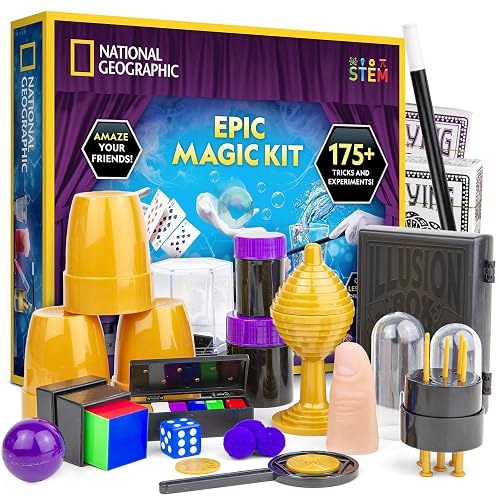 TOP CHOICEBest for young magicians who love scienceNational Geographic Epic Magic KitView on Amazon
- 4
 Best for volcano and reaction fansEduFields Science Kits for KidsView on Amazon
- 5
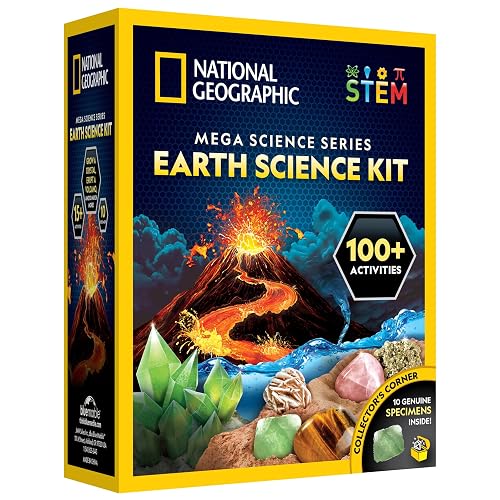 Best for earth science and geologyNational Geographic Earth Science KitView on Amazon
- 6
 Best for stage-style demonstrationsNational Geographic Science Magic KitView on Amazon
Our Top Picks
Each kit below is listed with the age range and focus its listing describes. Read the Key specs as “what the box says,” then check the contents list on the product page before buying, since bundle contents can change between manufacturing runs.
Quick Comparison
| Product | Best for | Key feature |
|---|---|---|
| NOVA Ultimate Science Experiment Lab by MindWare | Broad, well-rounded STEM sampling | 15+ STEM activities across several disciplines |
| National Geographic Science Magic Kit | Kids who want science as a show | 100+ experiments framed as magic tricks |
| National Geographic Amazing Chemistry Set | Chemistry and crystal growing | 100+ experiments, ages 8–12 |
| National Geographic Epic Magic Kit | Kids who learn by watching and doing | 75+ illusions and 75+ video lessons |
| EduFields Science Kits for Kids | Ages 8–14 who like reactions and volcanoes | 150+ experiments with a chemistry set |
| National Geographic Earth Science Kit | Rock, mineral, and weather interest | 100+ activities including a rock collection |
NOVA Ultimate Science Experiment Lab by MindWare
NOVA Ultimate Science Experiment Lab by MindWare, 15+ STEM Activities
Best for: Broad, well-rounded STEM sampling
This is a good fit for a child who is not yet sure which branch of science they like best. The kit spreads its activities across several disciplines, so it works as a sampler before a family commits to a more specialized set.
Key specs
- Listed as 15+ STEM activities
- Designed as a multi-discipline lab kit
Pros
- Covers multiple science areas in one box
- Useful as a starting point for kids new to hands-on science
- Activity count is clearly stated, which makes it easy to compare
Cons
- Fewer activities than the 100+ kits in this list
- Kids who already know their favorite topic may want deeper coverage
Bottom line: A strong pick for families who want variety and a balanced introduction to STEM.
National Geographic Science Magic Kit
Magic Tricks, Chemistry Activities, Hands-On Science Experiments, STEM Projects, STEM Learning Toy, Birthday Gift National Geographic Science Magic Kit with 100+ Experiments for Kids 8-12
Best for: Kids who want science as a show
Children who enjoy performing for family often respond well to this kit, because the experiments are framed as tricks with a scientific explanation behind each one. It also suits parents who want a bit of entertainment built into the learning.
Key specs
- Listed as 100+ experiments
- Marketed for ages 8–12
- Covers chemistry activities and magic-style demonstrations
Pros
- Strong entertainment value for reluctant learners
- Explanations tie each trick back to a real scientific principle
- Good for birthday gifts and group demonstrations
Cons
- Some tricks depend on single-use consumables that run out
- Kids who want serious lab-style work may find it lighter
Bottom line: Best for children who learn through performance and enjoy showing off what they discover.
National Geographic Amazing Chemistry Set
Crystal Growing, Chemical Reactions, STEM Projects, Hands-On Science Experiments, Science Kit, Birthday Gift National Geographic Amazing Chemistry Set with 100+ Experiments Ages 8-12
Best for: Chemistry and crystal growing
This kit suits a child who is already curious about why things react, change color, or form crystals. Its focus is narrower than the general-science kits, which makes it easier to build a deeper understanding of chemistry concepts over repeated sessions.
Key specs
- Listed as 100+ experiments
- Marketed for ages 8–12
- Includes crystal growing and chemical reaction activities
Pros
- Focused chemistry content builds coherent skills
- Crystal growing gives visible results over several days
- Clear topic focus makes it easy to match to a child’s interest
Cons
- Narrow topic coverage compared with all-around sets
- Crystal projects require patience and a stable, undisturbed spot
Bottom line: The right choice for a chemistry-curious child who will enjoy repeating experiments.
National Geographic Epic Magic Kit
75+ Illusions, 100+ Science Experiments, 75+ Video Lessons from a Professional Magician, STEM Activities, Birthday Gift National Geographic Epic Magic Kit with 175+ Tricks for Kids 8-12
Best for: Kids who learn by watching and doing
The listing pairs physical tricks with a large set of video lessons, which can help a child who learns best by seeing a technique demonstrated before trying it. It leans more toward illusion and performance than toward laboratory science.
Key specs
- Listed as 75+ illusions and 100+ science experiments
- Includes 75+ video lessons
- Marketed for ages 8–12
Pros
- Video lessons support step-by-step learning
- Large number of illusions for kids who love performing
- Combines magic and science in one set
Cons
- Less focus on pure lab science than chemistry-based kits
- Depends on access to video content to get full value
Bottom line: Ideal for a child who wants to perform magic while still picking up scientific reasoning.
EduFields Science Kits for Kids
science experiments for kids 8-9-12-14 volcano science kit, Chemistry Set, STEM Projects, Birthday Gift for Boys & Girls Butterfly EduFields Science Kits For Kids Ages 8-12-14 | 150+ Experiments
Best for: Ages 8–14 who like reactions and volcanoes
The listing spans a wide age band and includes a volcano-style project alongside a chemistry set. It can work for a range of ages if the adult is prepared to help younger children with the more involved steps.
Key specs
- Listed as 150+ experiments
- Marketed for ages 8, 9, 12, and 14
- Includes a volcano science project and chemistry set
Pros
- Experiment count is among the highest in this list
- Wide stated age range suits mixed-age households
- Volcano and reaction projects are visually engaging
Cons
- Wide age range means some activities may feel too easy or too hard
- Owners sometimes mention that instruction clarity varies by activity
Bottom line: A good value for families who want volume and enjoy reaction-based experiments.
National Geographic Earth Science Kit
Crystal Growing, Volcano Experiments, Rock Collection, Earth Science Activities, STEM Projects, Birthday Gift National Geographic Earth Science Kit with 100+ Activities for Kids 8-12
Best for: Rock, mineral, and weather interest
This kit moves the focus away from chemistry and toward the physical world. It suits a child who collects rocks, asks about volcanoes, or wants to understand how weather and minerals work.
Key specs
- Listed as 100+ activities
- Includes a rock collection and crystal growing
- Marketed for ages 8–12
Pros
- Rock collection gives kids real specimens to examine
- Earth science topics are less common in kids’ kits
- Pairs well with outdoor observation
Cons
- Less chemistry content than dedicated chemistry sets
- Specimens are typically small, so close supervision helps with handling
Bottom line: The best choice for a child whose curiosity runs toward geology and the natural world.
Buying Guide
Use these factors to narrow the list before you buy. Reading the listing against them takes only a few minutes and prevents most mismatches.
Age range and reading level
Manufacturers list an age band, but the real question is whether a child can read the instructions and follow multi-step directions alone. For children under about 8, plan to read aloud or sit beside them. Wide age bands, like the 8–14 range on some listings, mean the younger end of that range will need more help.
Good picks for this: EduFields Science Kits for Kids, National Geographic Science Magic Kit
Number of experiments versus depth
A count of 100 or more sounds generous, but many listed experiments are short, single-step activities. Check whether the kit has a table of contents or a sample page. A smaller number of well-explained experiments often teaches more than a large number of quick demonstrations.
Good picks for this: NOVA Ultimate Science Experiment Lab by MindWare, National Geographic Amazing Chemistry Set
Subject focus
Kits fall roughly into chemistry, magic-style science, earth science, and broad multi-discipline sets. Match the subject to what the child already asks about. A child who wants to know why rocks are shaped the way they are will get less from a pure chemistry kit, and vice versa.
Good picks for this: National Geographic Earth Science Kit, National Geographic Epic Magic Kit
Reusable versus single-use materials
Some components are consumable, like powders, dyes, and reagents. Owners of many kits report running out of certain supplies before finishing the full list. Look at the contents list for what is included and check whether replacement packs are sold separately.
Good picks for this: National Geographic Science Magic Kit, EduFields Science Kits for Kids
Instruction clarity and video support
Clear, numbered instructions with labeled diagrams make independent work much easier. Some kits add video lessons, which can help a child who learns by watching. If you plan to rely on video, confirm how it is accessed before purchase.
Good picks for this: National Geographic Epic Magic Kit, NOVA Ultimate Science Experiment Lab by MindWare
Safety and supervision
Check whether the kit includes or calls for eye protection, gloves, or a safe work surface. Keep food and drink away from experiment materials, and never let children mix unfamiliar chemicals without adult supervision. For guidance on safe home experiments, consult your child’s teacher or a qualified science educator.
Good picks for this: National Geographic Amazing Chemistry Set, NOVA Ultimate Science Experiment Lab by MindWare
Durability and storage
Many kits come in a box with many small pieces. A sturdy storage tray or a clear organizing system makes it easier to keep components together between sessions. Crystal and volcano projects also need a stable spot where they will not be disturbed for days.
Good picks for this: National Geographic Earth Science Kit, EduFields Science Kits for Kids
FAQ
What age is an ultimate science kit with 100 experiments best for?
Most kits in this category list ages 8 to 12, though some extend to 14. Younger children can enjoy them with an adult reading instructions and handling the more involved steps.
Do I need to buy extra supplies for these kits?
Most kits include the core materials, but some experiments use common household items like baking soda, vinegar, or food coloring. Check each kit’s contents list and the instruction booklet before starting.
Are science kits with magic tricks real science?
Many magic-style science kits explain each trick using a real physical or chemical principle, such as density, color change, or air pressure. They work well for teaching scientific reasoning, though they may focus more on demonstration than open-ended investigation.
How do I keep experiments safe at home?
Work on a protected surface, wear eye protection when the kit calls for it, keep food away from materials, and supervise young children closely. Dispose of chemicals as the instructions direct and wash hands after each session. For specific safety questions, ask a teacher or qualified science educator.
Which kit is best for a child who likes chemistry?
A chemistry-focused set, such as the National Geographic Amazing Chemistry Set, usually gives the most consistent coverage of reactions and crystal growing. A broader kit may suit a child who is still exploring.
Can these kits be used in a classroom or homeschool setting?
They can supplement lessons, especially for group demonstrations or hands-on review. For classroom use, check that the materials meet your school’s safety rules and that you have enough components for each student or group.
How long does it take to finish 100 experiments?
Many experiments take 15 to 45 minutes, while crystal growing or multi-day projects take longer. Working through a kit at one or two sessions a week is a practical pace for most families.
Conclusion
Each of these six kits serves a different kind of learner. The NOVA Ultimate Science Experiment Lab by MindWare suits families who want a broad introduction across STEM. The two chemistry and magic-focused National Geographic kits fit children who enjoy reactions or performing for others. The EduFields kit offers the widest age band and volcano-style projects, and the National Geographic Earth Science Kit is the right pick for a child drawn to rocks and the natural world. Match the subject focus, age range, and supervision needs to the child before deciding.
Sources
- Guidance from the National Science Teaching Association on hands-on science activities for students
- Consumer safety information on toys and children's products, including age labeling (cpsc.gov)
- Background on chemical safety and handling principles relevant to home experiments (nih.gov)
Related reading
- 6 Best Science Experiment Kits for Kids: Top Picks (2026)
- 7 Best Earth Science Kits for Kids (2026)
- 6 Best Science Lab Kits for Kids: Top Picks Compared (2026)
- 5 Best Science Experiment Equipment: Top Picks for Kids
- Best Science Tools & Instruments for Learning at Home and in Class
- 7 Best Safe Classroom Experiments for Students (2026)
- 6 Best Space Science Toys for Kids: Top Picks Compared (2026)
- 6 Best Science Demonstration Tools for Classrooms: Top Picks (2026)